
Link Engineering August 2026 Promotions
We’re delighted to announce the promotion of eight members of the Link Engineering team this August. This recognition is a testament to their hard work, development and the valuable contribution they make to our team and our projects.
At Link, our people are at the heart of what we do, and these promotions reflect the talent, commitment and ambition across our growing teams. From those early in their career taking their next steps to experienced professionals moving into senior technical and leadership roles, each promotion represents an important milestone in their career at Link.
Congratulations to our newly promoted team members
William Merricks – Technician
Daniel Donohoe – Assistant Engineer
James Hall – Assistant Engineer
Nicholas Side – Assistant Engineer
Max Montgomery – Assistant Engineer
Karishma Lally – Principal Engineer
Tom Andrews – Principal Engineer
Ben Latcham – Principal Engineer
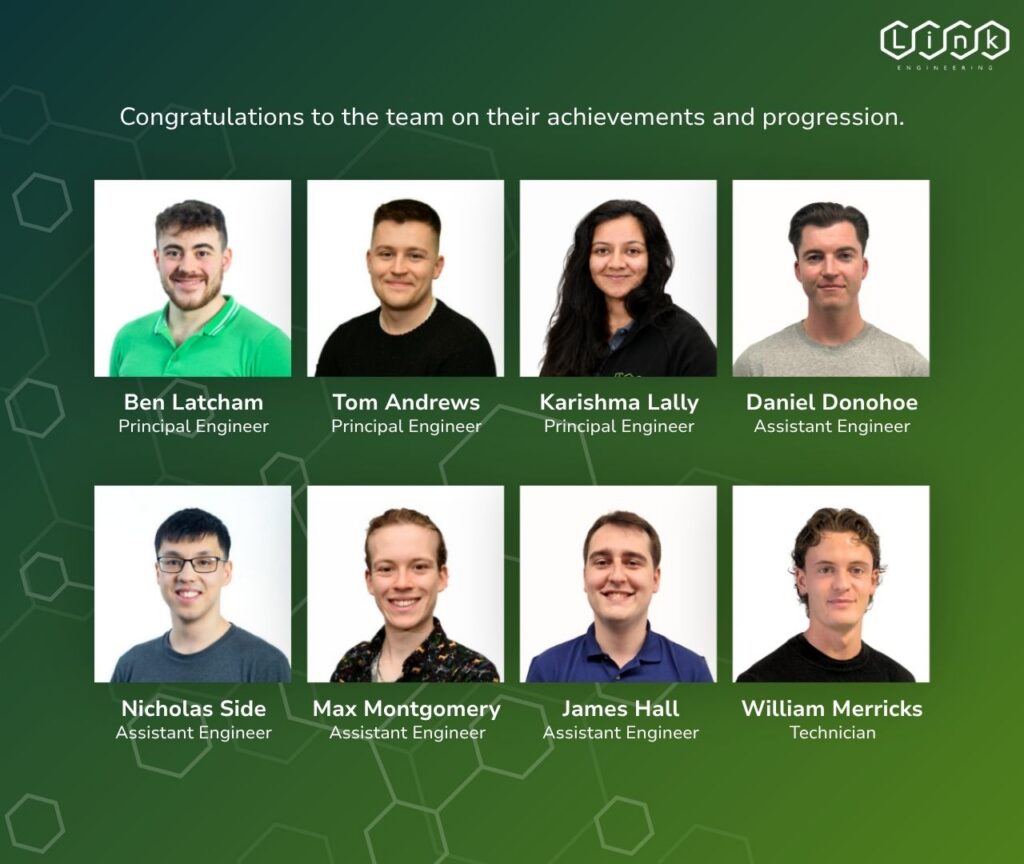
These promotions recognise the progress each individual has made in their role, as well as the contribution they make to our projects, clients and colleagues.
For William, Dan, James, Max and Nick, their promotions reflect the development of their technical knowledge, growing confidence and increasing responsibility within project teams. They have each shown a strong willingness to learn, take on new challenges and contribute to delivering great outcomes for our clients.
For Karishma, Tom and Ben, promotion to Principal Engineer honours their significant technical expertise, leadership and experience. Alongside their project responsibilities, they play an important role in supporting and mentoring colleagues, sharing their knowledge and helping to shape the future of our engineering teams.
At Link, we want people to have the opportunity to build a career that reflects their ambitions. That means giving our people the support, responsibility and opportunities they need to keep developing, whether they are taking their first steps into the profession or progressing into senior roles.
It’s something that sits at the heart of our Growth and Care values, and it’s brilliant to see that commitment reflected in the progression of our team.
Congratulations to William, Dan, James, Max, Nick, Karishma, Tom and Ben on their well-deserved promotions. We’re looking forward to seeing what comes next for each of them.
 Share
Share
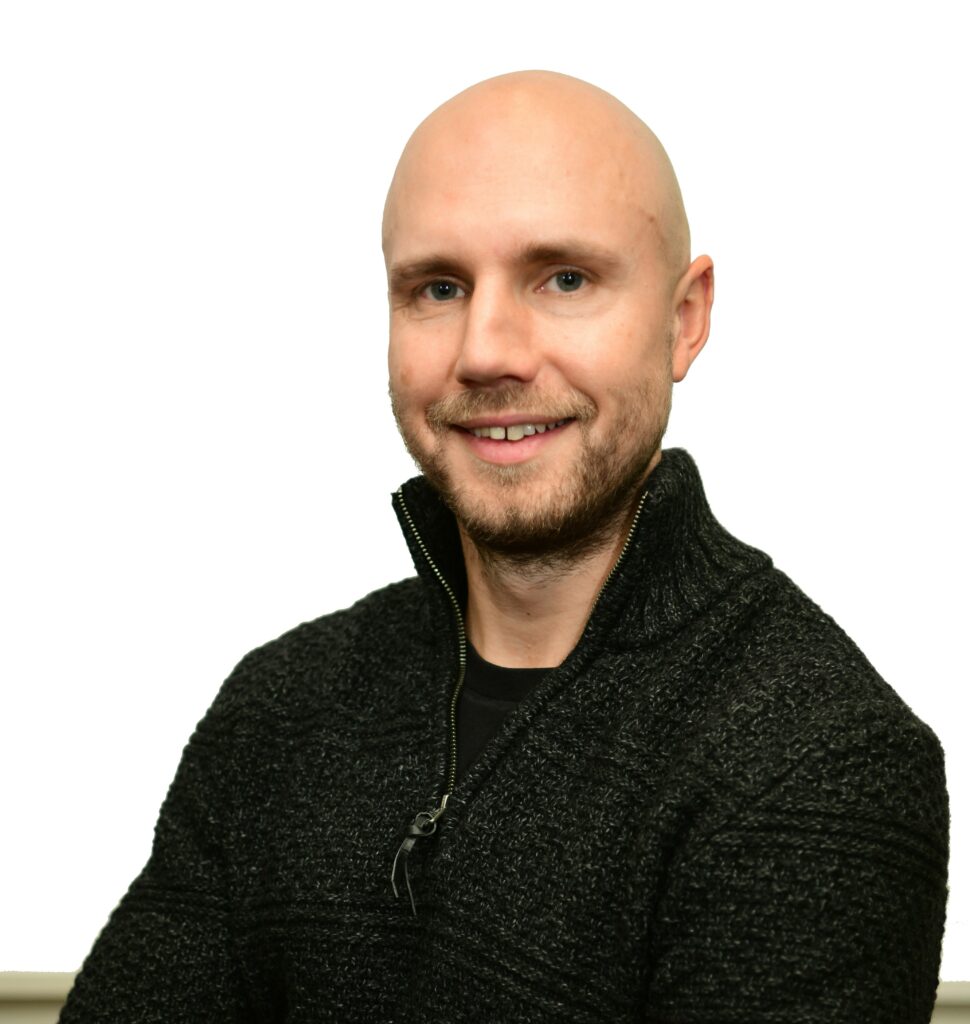
Neil Shuttleworth – People Spotlight
“I’ve always been drawn to projects that matter. Whether it’s supporting national energy infrastructure, complex nuclear facilities, defence programmes or everyday buildings like schools and hospitals, engineering is ultimately about solving problems and creating lasting impact.”
Neil Shuttleworth
Director | Chartered Engineer | MEng (Hons) CEng MICE
Director and Chartered Engineer with over 20 years of experience. Neil specialises in complex infrastructure and building projects across the energy, defence, nuclear and industrial sectors, with extensive expertise also spanning the healthcare, education, commercial and retail sectors. Combining structural engineering expertise with a broad understanding of civil and geotechnical engineering, Neil leads multidisciplinary teams to deliver practical, risk-informed solutions.
How did you get into engineering, and what led you to where you are today?
At school, like many engineers, I found I was good at maths and physics. I enjoyed solving problems with multiple variables and finding practical solutions. Combined with the opportunity to create something tangible and lasting, engineering seemed like the obvious path.
After graduating with a first-class degree in Civil and Structural Engineering, I started my career working on major building projects including hospitals, schools, retail developments and commercial schemes. As my career progressed (and the 2008 recession hit), I became increasingly involved in the energy, nuclear, industrial and defence sectors. The scale, complexity and critical nature of these projects presented unique challenges and demanded a deeper level of engineering competence.
This shifted my role from predominantly designing new structures to assessing existing assets and systems. This type of work relies less on applying prescriptive design standards and more on understanding how structures actually perform, using inspection data, material properties and operational history to make evidence-based decisions. In sectors such as nuclear and defence, where safety, risk and cost must be carefully balanced, this requires a high degree of engineering judgement and has been one of the most rewarding aspects of my career.
While my background is in structural engineering, I enjoy understanding the wider engineering picture. Working closely with civil engineers, geotechnical specialists, contractors and clients has given me a broader perspective that helps me coordinate multidisciplinary teams and identify risks and opportunities early in a project. For example, on several projects I recognised where challenging ground conditions or significant cut-and-fill requirements were likely to affect foundation design, allowing ground investigations and foundation strategies to be reviewed early, helping deliver a better outcome for the client.
Over time, my role has evolved from designer to project manager and now director. However, I still actively undertake technical work, which is something we value at Link. Earlier in my career, I was told I would eventually have to choose between a technical or management path, but I have found that combining both has been a real strength. It allows me to support and challenge our teams where needed, and communicate technical issues in a clear, practical way for clients.
In many ways, that balance of technical excellence, leadership and client focus is what attracted me to Link. The opportunity to establish and grow our Manchester team from scratch was a challenge I was excited to take on. It hasn’t always been easy, but I’m proud of the team we’ve built, the projects we’re delivering and the opportunities we’re creating for the future.
Is there a project you’re particularly proud of?
Nuclear Decommissioning at Sellafield
One of the projects I’m most proud of was supporting the demolition strategy for the Pile 1 Chimney at Sellafield, one of the UK’s most significant nuclear decommissioning projects. The chimney stood approximately 110 metres high and 14 metres in diameter, with around 1,400 tonnes of reinforced concrete and steel forming the diffuser structure at the top. Located in the middle of an operational site, it had to be dismantled in small sections, presenting a unique combination of structural, logistical and safety challenges.
My involvement began with assessing the existing structure and developing a safe demolition sequence. As the project progressed, my responsibilities grew from Lead Engineer to Design Consultant’s Project Manager, overseeing both the technical delivery and broader project requirements. When I joined the project, the proposed approach involved strengthening the diffuser before demolition could begin. Through detailed analysis and structural assessment, I proved that the diffuser could be dismantled safely without strengthening works, which saved time and cost and avoided putting people at risk.
One of the most technically demanding aspects of the project was showing that the structure could safely support a tied tower crane. This required a level of engineering judgement that extended well beyond conventional code-based design and drew heavily on my experience in assessing existing structures.
What makes this project particularly memorable is the impact it delivered. We developed a safer, more efficient solution for a nationally important programme – something very few engineers get to be a part of during their careers.
Supporting Critical Infrastructure
Alongside my nuclear experience, I’ve led multidisciplinary teams across the energy and industrial sectors, including National Grid facilities and electrical substations that form part of the UK’s critical national infrastructure. Much of this work involved upgrading existing assets and enhancing site security under demanding programmes needed to prepare for the 2012 Olympic Games.
I’ve also been fortunate to contribute to a number of defence programmes. While these projects are often confidential, they share many of the characteristics that define work in the nuclear sector: complex stakeholder environments, stringent safety and assurance requirements, and the need to make robust engineering decisions where risk, operational requirements and programme constraints must all be carefully balanced.
On one defence project, I was involved from the outset as Structural Lead, working closely with safety case managers and other disciplines to evaluate alternative structural solutions as the design developed. The role required more than simply designing a structure; it involved understanding the wider objectives of the facility, challenging assumptions and helping the wider team navigate emerging requirements as the project evolved.
How do you see the industry changing in the years ahead?
The energy, defence and nuclear sectors are entering a period of significant investment and transformation. We’re seeing renewed momentum behind nuclear power through projects such as Hinkley Point C, Sizewell C and the development of Small Modular Reactors, alongside investment in renewable energy and the electricity network needed to support it. Defence spending is also increasing significantly, though the debate around how it will be funded continues. Either way, there is clearly a growing need for engineering expertise to support the delivery, renewal and long-term operation of critical infrastructure.
While this demand spans both new-build projects and existing infrastructure, many organisations are looking at how assets can be adapted, upgraded and have their operational life extended. This is often driven by programme timescales, capital constraints and the desire to reduce embodied carbon, making asset assessment and life extension an increasingly important part of the engineering landscape.
Digital tools and emerging technologies are becoming increasingly important, but engineering judgement remains fundamental. In my experience, some of the greatest value engineers provide comes from identifying risks, opportunities and project constraints early, by drawing on their knowledge and experience before detailed design begins. That insight helps clients make informed decisions, avoid unnecessary cost and move projects forward with confidence.
I also see a growing need for engineers who can bridge disciplinary boundaries. As projects become larger and more complex, successful delivery depends on identifying interface issues and dependencies in the early stages. In many cases, it is at the overlap between disciplines where the greatest opportunities, and the greatest challenges, are found.
How would you describe your approach to leading and mentoring engineers?
My approach to leadership is collaborative, supportive and focused on providing clarity.
I believe the best outcomes come from bringing together talented people, creating an environment where they can challenge ideas constructively and giving them the confidence to develop their own judgement.
When recruiting or mentoring engineers, I look for interest, enthusiasm, curiosity, integrity and a willingness to keep learning. Technical skills are important, but communication, teamwork and professional judgement are often what separate good engineers from great ones. I always encourage engineers to come with potential solutions rather than simply present a problem.
One of the best pieces of advice I could give is never be embarrassed to ask questions or pretend to know something that you don’t. Nobody knows everything and sometimes the simplest questions prevent issues manifesting themselves later in projects.
Engineering is a continual learning process regardless of how much experience you have. There is always something new to learn from colleagues, clients and projects, and it is not all top down! Get outside your comfort zone – that’s where the growth happens.
What do you get up to outside of work?
Outside work my wife and two young children keep me busy and provide a welcome balance to the demands of my career. I love watching my kids’ personalities and interests develop.
I enjoy staying active, spending time outdoors and following the mighty BWFC and F1. I also like to DIY, which is probably not surprising given my profession. We have been renovating our house for the past couple of years, and I’ve enjoyed doing parts of it myself – though I am ready for it to end now!
What excites you most about the future?
The UK is entering an exciting period of investment across energy, defence and critical infrastructure. Having spent much of my career working in these sectors, I’m excited by the challenges and opportunities ahead. We have a hugely talented team, and I’m looking forward to building on what we’ve achieved so far as we continue to grow our Manchester office, developing the next generation of engineers and helping our clients deliver nationally significant projects.
Whether you’re looking to join our team or are seeking support on your next project, I’d be delighted to have a conversation. Please don’t hesitate to drop me an email at neil.shuttleworth@linkeng.co.uk, call 0121 716 0100, or connect on LinkedIn.
Share
Inside Link’s Latest Business Update
Twice a year, our Birmingham, Manchester and London teams come together for our company-wide Business Update, a day dedicated to sharing where the business is heading, but just as importantly, to championing our culture and values whilst spending time with colleagues from across our offices. This time around, the whole team gathered in Birmingham for a day packed with insight, celebration and connection.
Setting the Tone
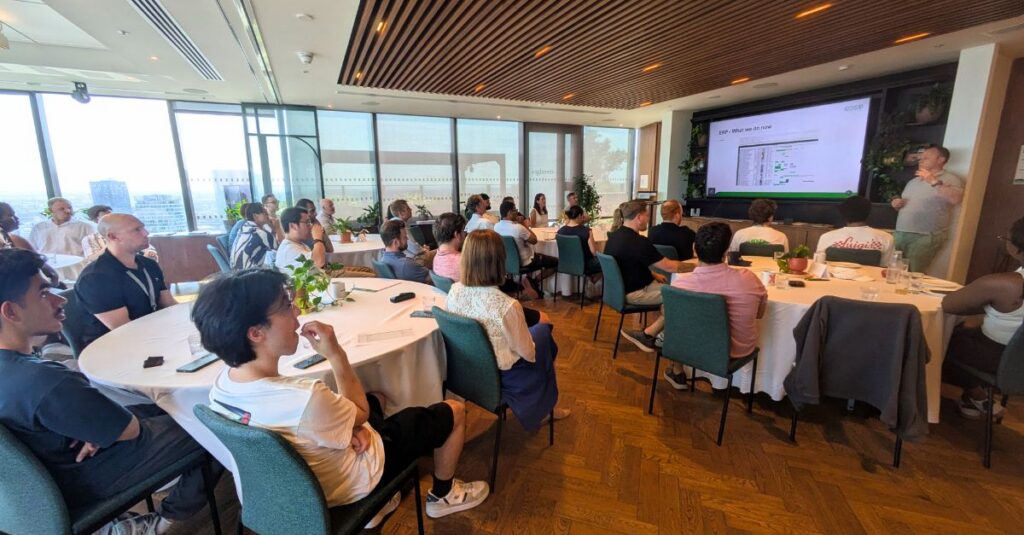
The day opened with a talk from Martin, our new Ground Engineering Technical Lead, who joined Link with a strong background in diversity, equity and inclusion. Martin highlighted the benefits diversity of experience and ways of thinking bring, from better problem-solving as people bring different approaches and skills to the table, to stronger respect and understanding across teams, and greater adaptability in competitive markets.
“As a neurodivergent (autistic, dyslexic and dyspraxia) and visually impaired person in engineering, EDI (Equality, Diversity and Inclusion) is important to me because it helps create an environment where everyone has the opportunity to succeed, regardless of their background. Everybody Doing It in small steps helps to ensure that barriers to progression, unconscious bias and unequal opportunities are identified and addressed, allowing people to be valued for their skills and contributions. It also creates a more inclusive culture where individuals feel respected, heard and able to bring their authentic selves to work. So for me, EDI is about fairness, respect for one another and creating an industry where future generations can see engineering as a career that welcomes and supports everyone to thrive.” – Martin, Ground Engineering Technical Lead
It set a positive and inclusive tone to the day, and we’re delighted to have Martin’s experience with championing diversity at Link.
Our Values & Our Vision
With so many new faces in the room, it felt like the perfect opportunity to recap our company values, structure and journey so far. Leadership shared their vision for the business and how they’ll be supporting the team through the next phase of growth. There’s a very exciting development on the horizon which we’re not quite ready to share yet – watch this space!
We also took the chance to reflect on some of the great social activities and ESG achievements we’ve had this year. Our social team Will and Blayn have organised some fantastic events, from VR Sandbox sessions and World Cup watch parties to games nights and rooftop cocktails. It’s these kinds of moments that turn a team of 50 into a real community!
We’ve also given back to the local community through work experience placements, apprenticeships, volunteering days, supporting children’s football teams and building relationships with schools and universities. Our Principal Civil Engineer, Dylan Purewal has recently taken up the mantle of ESG lead and has already made a great impact by helping organise the Link Green Commute Week, which is just one of our many sustainable travel schemes.
“For me, ESG is simply about doing business the right way. It’s about thinking beyond short-term results and considering the impact we have on our people, our communities and the environment. I’m proud to be leading this work and helping ensure ESG becomes part of how we think and operate every day.” — Dylan Purewal, Principal Civil Engineer
New Systems, New Projects, and New Faces
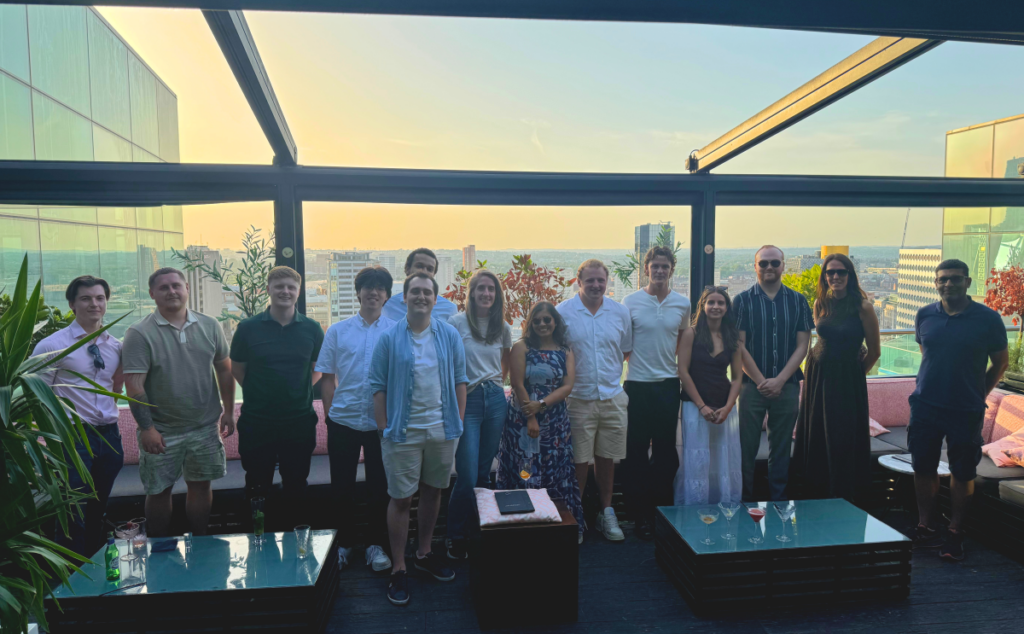
The team got a first look at the upcoming changes to our internal systems and processes, designed to cut out friction from day-to-day work. Before our Structures team gave the room a glimpse into their world, including a fascinating London-based project we’ll be sharing more on soon.
Then it was over to Alan Yan, our new London Director, to introduce himself to the wider team for the first time. He shared some great highlights from his career, including working on the National Tennis Centre in Qiddiya City, Ellison Institute of Technology in Oxford, UCB Headquarters Campus in Windlesham, and the new London Museum Smithfield. Fun fact, Alan is included in the Guinness World Records!
Our Ops Director, Jess, closed out the morning with a look at the Link 4 You benefits package, along with a preview of a brilliant new benefit offering launching in August.
Celebrating Our People
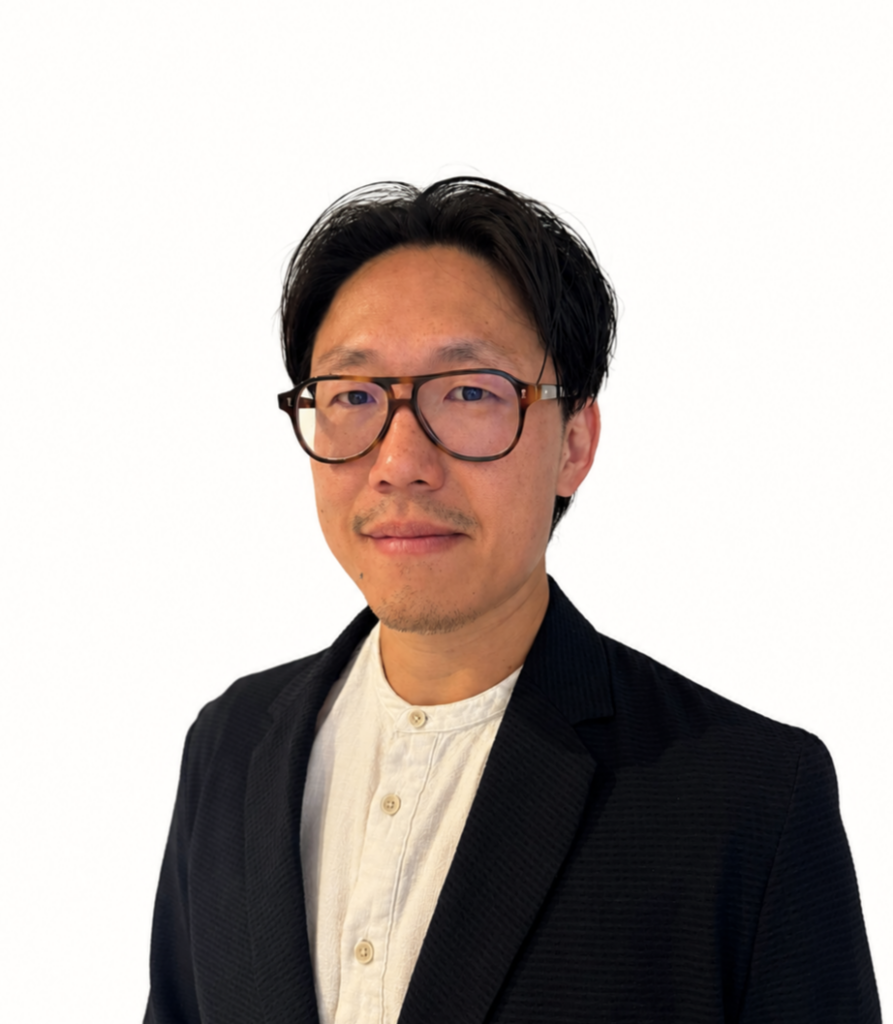
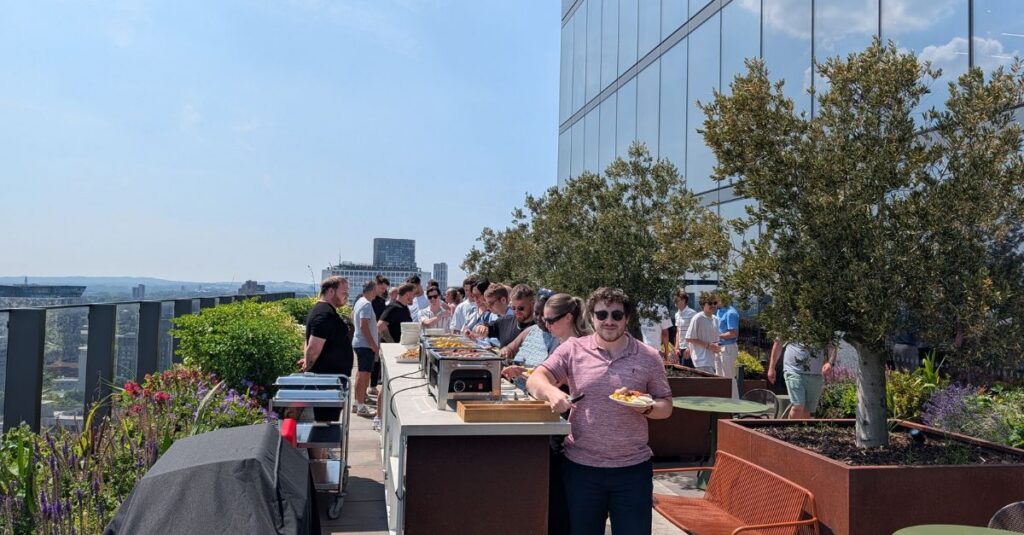
The Business Update is all about our people, and after everyone caught up over a BBQ lunch on the sun-baked rooftop terrace, we moved into a practical session on feedback. The team took part in an activity designed to build skills in giving and receiving feedback. It’s something we take seriously at Link: honest feedback is what keeps our culture genuinely open, helps us grow and makes it possible for anyone, at any level, to raise a challenge without hesitation.
The formal part of the day closed with the Gillmoore Awards, where we recognised the people who’ve best lived out Link’s values over the past twelve months. The winners were:
- Max Montgomery — Smart, for finding smarter, better ways of working.
- Melissa Smith — Trust, for excellent financial management.
- Daniel Donohoe — Care, for his support in rolling out our new systems and the way he consistently shows up for the wider team.
- Dylan Purewal — Growth, for building exceptional client relationships.
Congratulations to the winners!
Giving Back & Letting Loose
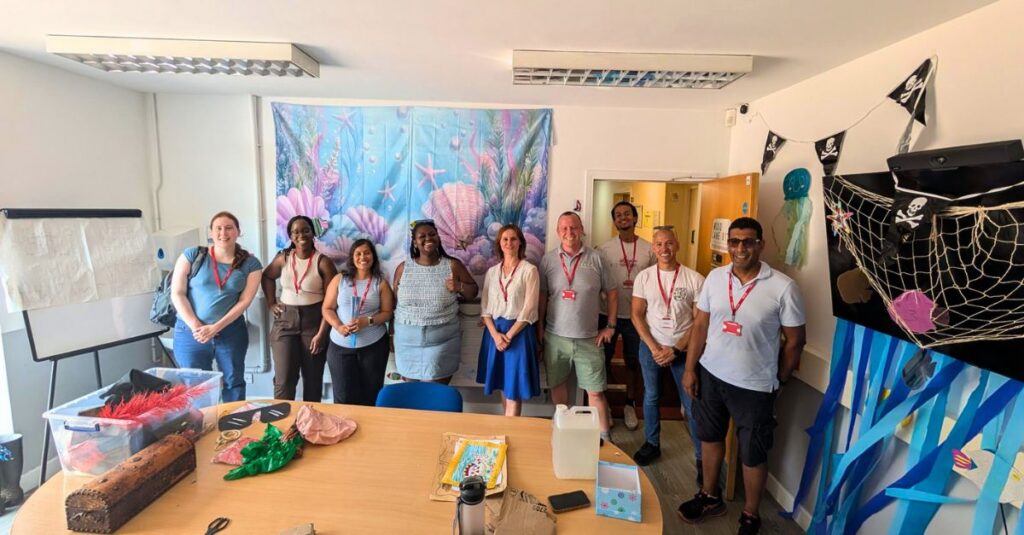
With the talks wrapped up, the team split in two. Ten people headed to Focus Birmingham, a charity supporting people with sight loss and complex needs, to help them get ready for their summer fete. The rest of the team took to the streets for a scavenger hunt around Birmingham city centre. Everyone reunited at Roxy Ballroom that evening for food, games and karaoke that ran long into the night.
Days like this are what keep our team and our business growing in the right direction, and we’re already looking forward to the next one!
Share