
What Happens When Transport Planners Take Their Own Advice?
As transport planners, we spend much of our time helping developers, businesses and local authorities create places that support more sustainable travel.
Whether it’s improving walking and cycling connections, enhancing access to public transport, or developing Travel Plans that encourage behaviour change, our recommendations are built on a simple principle: people are more likely to choose sustainable modes of transport when they are practical, convenient and attractive alternatives to driving.
Earlier this year, Green Commute Week gave us an opportunity to put that principle to the test ourselves.
Colleagues across Link Engineering were encouraged to rethink their usual journey to work and try a more sustainable alternative for a week. While the aim was simple, the results offered an interesting insight into how travel habits are formed and how easily they can be challenged.
Can Encouragement Change Travel Behaviour?
It would be easy to look at the results and conclude that they were inevitable. After all, Green Commute Week was specifically designed to encourage colleagues to choose more sustainable ways of travelling.
The more interesting question is whether people found those alternatives practical enough to use them again once the challenge was over.
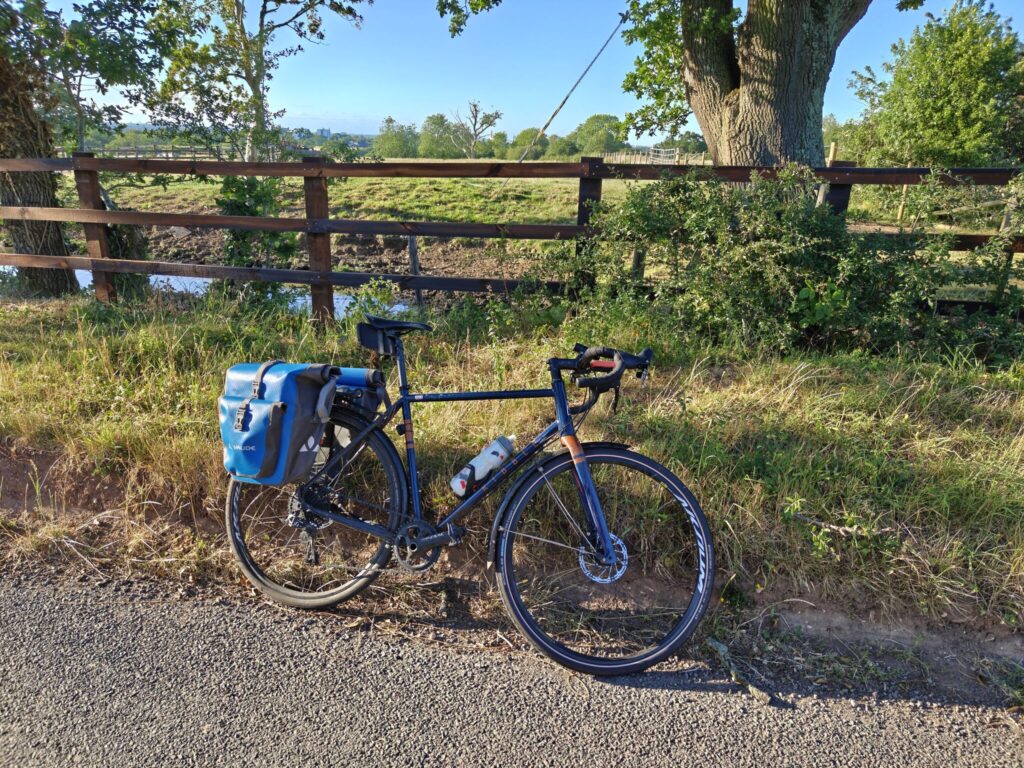
During the week, the number of colleagues cycling to work more than doubled, with several participants replacing public transport journeys of around five miles each way with cycling. Car sharing also emerged as a new travel option, while some multimodal journeys involving both car and rail were replaced with lower-carbon alternatives.
Collectively, participants cycled approximately 286 miles during the week, resulting in an estimated saving of around 158kg of CO₂ emissions.
Those figures are encouraging, but the most significant finding wasn’t the mileage covered or the carbon savings achieved. It was that every participant said they would consider continuing their Green Commute Week travel choice in the future, suggesting that many found these alternatives more practical and convenient than they had expected.
From Transport Planning Theory to Reality
One of the fundamental principles of transport planning is that people don’t automatically choose the most sustainable mode of travel. More often, they choose the option that feels most convenient, reliable and practical for their individual circumstances.
Factors such as travel distance, public transport availability and access to safe walking and cycling infrastructure all influence those decisions.
Our Green Commute Week findings reflected exactly what we see in our professional work. While the challenge was designed to encourage people to try more sustainable modes of transport, the results suggest that behaviour change is often less about persuasion and more about opportunity. When people are given a reason to test an alternative, they may discover it is far more practical than they had assumed.
For transport planners, that’s an important lesson. Meaningful behaviour change doesn’t necessarily start with someone deciding overnight to abandon their car. It starts with creating the right conditions for people to try different options and experience the benefits for themselves.
What Can Employers Learn?
The findings also highlight the role employers can play in supporting sustainable travel choices.
Workplace location, access to public transport and the availability of walking and cycling infrastructure will always be significant factors, but businesses can help employees explore alternatives through initiatives that encourage participation and raise awareness.
Our experience during Green Commute Week suggests that simply giving people a reason to try a different way of travelling can be enough to challenge assumptions and open the door to longer-term behaviour change. For some employees, an alternative mode of transport may be something they have never seriously considered before.
There are a number of ways organisations can support more sustainable commuting, including:
- Organising travel challenges and awareness campaigns that encourage employees to trial alternative modes of transport.
- Providing financial incentives such as Cycle to Work schemes and discounted public transport season tickets.
- Offering cycling training, maintenance workshops and cycle safety sessions to help build confidence among new and existing cyclists.
- Maintaining regular communication on sustainable travel options, available incentives and the health, wellbeing and environmental benefits of active travel.
- Providing practical facilities such as secure cycle parking, showers, changing areas and lockers to make walking and cycling more convenient.
While not every journey can be made by walking, cycling or public transport, our experience suggests that people may be more open to changing their travel habits than they initially think, particularly when employers provide the encouragement, information and facilities needed to support that choice.
A Reminder of Why Good Transport Planning Matters
For our team, Green Commute Week was more than an internal sustainability initiative.
It provided a small-scale demonstration of something transport planners strive to achieve every day: creating the conditions that make sustainable travel a realistic choice.
The challenge reinforced an important point. Behaviour change isn’t about forcing people to travel differently. It’s about giving them viable alternatives and the confidence to try them.
Sometimes, that’s all it takes to discover a better way of getting from A to B.
If you require a transport assessment for your scheme, support developing a travel plan or you’re unsure what you might need, please don’t hesitate to get in touch with our friendly and knowledgeable team.
 Share